Showing posts with label air medical transport. Show all posts

Tuesday, 25 November 2014

Understanding When to Request an Air Ambulance for Your Patient

Air ambulances have literally revolutionized medical transport all over the world. But, the service has to be used wisely.
Back in the day when patients could be transported only on wheels, there was no question of pondering over the when, why and how. Things have changed now and for good – state run and private air ambulance transport services are here to pick a patient and ensure on-time treatment.  But, when exactly is it okay to call for an air ambulance?
Here are some important points to consider.
Fear Factor – Before you choose to opt for air travel medical assistance, the question needs to be asked of yourself whether it is completely out of the fear of the situation or fear of having to take care of the patient that you are making the call.

Air Ambulance
Access Points (in case of emergency) – You need to make sure you call from a location where a helicopter can easily land and subsequently take-off. If that is not the case to begin with, you may be wasting your time making the phone calls.
Time – Is time of critical importance for your patient? If that is the case, there are other methods of medical transportation that might be beneficial. An air ambulance, though quick when in the air, usually takes significant time in the landings and taking off. It is not all that quick as you may imagine.

Extraction – Air ambulance transport is ideal for high emergency scenarios or evacuations. If the patient is severely sick and also stuck, air ambulances are just the thing. In other scenarios where a lot more medical equipment and crew is required or the patient can manage travel along the roads, regular ambulances run by non-emergency medical transport companies should do just fine.

Thursday, 6 November 2014

History of Emergency Medical Services

The concept of air ambulances was first introduced in 1926, in the US by the Army Air Corps. Read on to know more about the history of emergency medical services or air medical ambulances. 

The first air ambulance was used to transport patients from Nicaragua to Panama. Military airplanes were often used in the Word War II for evacuation of soldiers from the battlefield. Even helicopters were pressed into service in the war against Korea since reaching the injured by road was not possible.
1. Quick Evacuations
The army soon realized that air ambulances and helicopters were saving time and soldiers lives much faster than the conventional road ambulances. Soon, dedicated helicopters were converted into medical helicopters. According to records, around 22,000 troops were actually evacuated by air in the World War II. This is a huge number and the number of causalities could be much higher had there been no air medical support for the wounded soldiers on the line of duty.
Quick Medical Evacuations
2. Lack of Specialized Skills
Earlier, by the time a patient reached a specialized facility, it was all too late. Either the journey took too long or the logistics support was not able to organize the arrangements on time. It was due to this reason that healthcare service providers as well as various government health departments began to consider the use of helicopters and planes for transporting wounded and critically ill patients.
3. Air Ambulances As a Boon
Travel medical assistance companies brought about a revolution in the medical industry. Soon patients were being picked up from their homes even in the interiors and transported to specialized facilities in record time. The logistics teams were able to organize all activities beforehand, allowing the patient to get well earlier than it was previously possible.

Saturday, 18 October 2014

Steps That Will Help You To Determine The Cost Of Air Ambulance

Hiring an air ambulance is a very costly affair. Selecting whether you need a helicopter or an aircraft is the easy part. Whether you will be able to bear the fees is the tricky part.
The fees of an air ambulance can range from $12000 to $25000 depending on the service provider and the distance that is being covered. As obvious emergency air transport is called for in an extreme medical emergency where transporting the patient to a medical facility becomes a matter of his life and death. Keep the following points in mind when selecting a transport company for an air ambulance.
1. Look For A Local Company
Hiring a local company makes more sense than asking for an out of state provider to offer their services. Their costs will be lower and the team will be well versed with the area.
2. Go Through The Services Carefully
Depending on the medical care that the patient needs, the transport company should be chosen. If the patient needs specialized treatment, choose a company that has a tie up with such a medical facility. Ensure that their staff is well experienced and they have the latest equipment on board.

Air Ambulance
3. Examine The Quote Carefully
When the company offers quotation, ensure that it is n written. It should be all inclusive and there should be no hidden costs.
4. Be Very Clear About The Health Cover
There are certain policies that only cover a certain percentage of air transportation costs and other do not cover them at all. Ensure that the health cover is equipped to cover the cost of hiring in air ambulance, or else be ready for a lifetime of debts.

Saturday, 11 October 2014

How Travelers Can Prepare For Medical Emergencies Outside Their Country?

The itinerary of a vacation is the key to its success. However, even the perfect planning cannot anticipate any accidents or medical emergencies that may arise all of a sudden.
It is critical to review your healthcare and other medical policies before departing the country for a vacation abroad. Travelers should be prepared for any medical needs that might arise and know the resources they can count on in a foreign country. They should be ready to negotiate in the local language or else know whom to contact. In case the traveler is unable to return on his booked tickets he or she should know how to make alternate arrangements and most importantly how to pay for them.
1. Points To Consider
When the planning for a trip begins, the traveler should consider the following points. Where will he get the right care, how will he communicate to a medical team, will he be able to pay for the medical bill, are things that need to be thought of in advance. The medical insurance should be studied carefully and it should be determined if it will be able to cover all medical emergencies or not.

For Medical Emergencies
2. Do Not Compromise On Health Care
When faced with a medical emergency aboard, do not compromise on the standard of care. Carry medical travel insurance or plan hat offers around the clock assistance, by just making a call. The helpline with its extensive resources should be able to line up the best medical team on your beck and call. If the local facilities are not up to the mark they can also make arrangements of an air ambulance.
3. Make The Right Financial Arrangements
When selecting a travel insurance go through the features carefully. Some hospitals might require a deposit at the time of admitting others might not. Choose a policy that has 24 hours phone support and logistics support in order to transfer the required amount to the hospital directly on your behalf.

Wednesday, 8 October 2014

Why Medical Evacuation Coverage is Necessary for Cruise Trips?

While planning your next vacation keep in mind that emergencies can occur anywhere. And when thousands of miles away from land, evacuation may be the only viable option for you.

Cruise Trips
Whenever you plan your vacation for a cruise, you never really consider the potential medical emergencies or other incidents that may threaten to sour your trip. These emergencies occur a lot more than you think. And once they do, the process of treating or evacuating a person becomes a complex and nobody wants to get involved with the different laws of evacuation from the sea etc.
Add to that the amount of expertise or training; it would take for crews and staff of the ship to coordinate with services that help in the medical evacuation process. Therefore, the process itself becomes financially exhaustive and may end up ruining your vacation in more ways than one. You may have heard stories about the Coastguard making these rescue trips, but they are unlikely to show up after your cruise has gone further than particular distance from the shore.
There are additional facts you may not be aware of. One of these is that the cruise captain or the crew are not obligated to transfer you to shore in case of health problems – no matter how bad they are. If there are medical services available they will be from independent contractors who may charge you anything and end up costing you a small fortune. The ship’s doctor is the ultimate boss, so if he asks you to go, you have to without having a say in it.

Medical Evacuation
While ships are equipped with basic supplies to handle minor ailments, or illnesses, something as serious as rampant heart condition is no child’s play, and in the event of such a situation arising evacuation becomes the only solution.
No cruise “Protection Plans” will ever cover you for evacuation, and therefore it is essential you have a health insurance scheme with ample coverage for evacuation, to ensure your vacations do not end in disasters. 

Saturday, 4 October 2014

What Kind of Medical Equipment is On a Medical Flight Transport

Air ambulances transport critical patients, so it must be obvious they carry equipment required to handle the patients’ condition. Here are the things that make an air ambulance safe, even for highly critical patients.
Air ambulance transportation is meant for highly critical patients, who are unable to travel via normal passenger flights or have to be rushed across over the city’s traffic ridden road networks when timeliness is of prime importance. It is therefore, critical, to have on-board the air vehicles, supplies and equipment that are capable of handling any complications or emergencies.
The Stretcher
The stretcher is an obvious presence aboard an air ambulance. Custom made, these stretchers are ideal to hold a patient pneumatically still, thereby maintaining his stability over turbulent flights as well. The stretcher can be attached to the seat rack, thereby providing it further solidity. An automatic loading system is also aboard the air ambulance.

Medical Flight Transport
The Ventilator
The ventilator is another essential piece of equipment loaded on the air ambulance. It comes with capabilities for handling all kinds of patients from adult to infant, and from neonatal to pediatric. The controls on the ventilator, allow the nurses to control precision, sensitivity, pressure etc. The ventilators are technically current, as far as standards in the field go, boasting features like Nebulizer, SIMV, CPAP etc.
Antibiotics
The higher quality air ambulances come with installed IV pumps and a whole host of antibiotics like: Levoflaxacin, Metronidazole ,Cephtriaxone , Cleocin among others. These antibiotics can be administered as per discretion of the attending crew, in case a situation arises where the patient is under the risk of being infected by bacteria.
Temperature Monitor
An in-flight heat monitor is also available inside the ambulance to monitor a patient’s heart activity. The monitor comes with all the regular capabilities of a heart monitor that is used in a hospital, from pulse oximeter, to CO2 monitoring among others. Apart from all these devices and equipment a first-rate team of nurses and staff is on-hand, and trained to tackle all possible situations.

Thursday, 2 October 2014

Medical Repatriation- Meaning and Significance

In situations where a person, suffers from an injury or illness, outside his native country that person can be entitled to medical repatriation. This is a service provided by the medical escort companies that assists patients in returning to their country of citizenship.
A medical evacuation is generally carried out in cases of a medical emergency where treatment is not readily available. Under this, you will be transported to the nearest medical facility, within or outside the country, either via an air ambulance, commercial flight or an ambulance, according to the feasibility.
Medical Repatriations on the other hand, is performed exactly under the same conditions as the medical evacuations, but it provides you the freedom of getting treated in your home country – in a known environment, with family and friends.
Can Be Availed In The Remotest Of Locations
When availing Repatriation services, air ambulance services can pick the patients from the remotest of locations, even where other medical facilities are not approachable! Traveler patients can benefit as they get access to the much needed medical facilities – on time.


Medical repatriation
Repatriation Services For All Types Of Cases
Medical Repatriation services can be provided for all types of cases - from critically ill, to burn trauma cases to accidental injuries, etc. In addition, the staff of medical repatriation services can even coordinate between embassies and medical consultants in case of severe medical emergencies. This helps the family and friends of the patients to concentrate on the wellbeing of the patient and not stress about other formalities.
Deliver Excellent Medical Assistance
The Medical Repatriation services are known for delivering efficient medical care to patients abroad. These services are an important function of providing quality health care 24/7 – saving the lives of many patients. 

Sunday, 21 September 2014

Having Contact Number of a Private Ambulance Service is a Good Idea

A medical emergency can show up at any time, leaving the victim utterly perplexed. But if you have a reliable provider of private ambulance services on call all the time, you can save lives!

With the global population increasing every day, the events of medical emergency are occurring more frequently too.
Having contact details of a private ambulance company always with you has certain advantages. Should an emergency arise, you can get quick help for yourself or people around you!

Why Have a Private Ambulance Provider Always in Contact?
If you have a reputed private ambulance company in contact at all times, you can always expect to get:

1. A Quick Response: During a medical crisis, the time taken to access medical care is often the difference between an unfortunate event and a successful recovery. When you need immediate medical attention, you can call upon the ambulance provider for emergency services.

2. Suitable Transportation: In certain situations, particularly the late night hours, it can be extremely difficult to find transportation to reach a hospital. A private ambulance can get you to a health center in no time. Also, if you live in a traffic-prone area and need help during rush hours, an ambulance can be used to cut through the crowd.

Contact Air Ambulance

3. Appropriate Care: Private ambulances are fully-equipped with practiced physicians, paramedics, and emergency response teams. They always have alternative medication, wheelchairs, and portable oxygen concentrator for travel during medical emergencies. Experts can monitor and stabilize a patient’s health condition using latest medical equipment.

4. 24-Hour Service: Most private ambulance providers offer 24-hour services. Having such a company in contact all the time ensures that you’ll get a quick response in a medical emergency situation. These professionals can ride you to a hospital 24X7, regardless of what time it is!

Monday, 8 September 2014

Medical Transport: 4 Tips For Air Ambulance Passengers

Family members who decide to accompany their loved one on an air ambulance need to be fully fit and prepared for the ride.
Air ambulance passengers, who accompany a patient, need to take care of themselves too in order to execute their duty properly. They should be ready to sit upright and walk with the patient.  He or she should avoid falling ill or putting himself in state of discomfort. As it will only add stress to an already stressful situation.
Keep the following tips in mind in order to boost to your immunity and be ready for the journey –
1. Boost Up the Immunity
A week before the journey, the accompanying family member should start taking supplements for Vitamin C and other Echinacea tabs. They will build the body’s defenses and give it immunity to fight off any infection.
2. Sit in The Right Position
A family member, who accompanies a patient, needs to be on his toes all the time. But if he sits in the right position, he will tire less and will be able to handle the job for long hours. He or she should avoid sitting with their legs crossed. The circulation in the legs might get affected by sitting in one position for long hours.

Tips for Air ambulance Passengers
3. Check about Snacking and Water
Before hiring an air ambulance from a medical transportation management company, be sure to check all the basic details. The fellow passenger needs to check if they provide snacks and drinks when on board. The accompanying family member needs to ensure that at all times he is well hydrated and has a normal blood sugar level.
4. Avoid Drinking and Coffee
A few hours before the flight, the accompanying air ambulance passenger should stop all intakes of caffeine and alcohol. They only dehydrate the body and cause dryness inside the body. More than anything they should follow the instructions of the paramedics strictly.

Wednesday, 20 August 2014

Air Ambulance Services – The Operating Model

Air ambulances are civilian aircrafts that are pressed into service during a medical emergency.
Air ambulances can be categorized on the basis of their operating models of the EMS. The emergency medicine system has classified air ambulances into two base models –
  • The Anglo American Model
  • The Franco German Model
Both these models vary in their approach to a situation. While in one the doctor is in charge, in the other the paramedic calls the shots.
Lets read about these two models in detail –

1.Franco German Model –

  • In the air ambulance based on this model, the physician travels with the patient in the air craft. The doctor monitors the patient constantly and takes all the decisions regarding him.  
  • In this model the support staff like nurses, paramedic staff and the doctors arrive at the site or accident location with the help of an air ambulance.
  • The paramedics take care of the first aid and hand over the case to  the doctor.
  • The doctor arrives at the crisis site with all the equipment he might need.
  • The patient is transported only deemed stable and fit to travel.
Air Ambulance Services

2.  The Anglo American Model –

  • The patient is straightaway transferred to a hospital with the help of long distance medical transport services.
  • The doctors and nurses take over the moment the patient reaches the medical facility.
  • The paramedics handle the case at the location and ensure that a patient is transported safely to the hospital.
  • The first line of treatment is handled by the paramedics and no doctor is involved at that stage.
  • The team stays in touch with a doctor in case any special on the spot procedures need to be carried out.

Thursday, 14 August 2014

What Are The Different Kinds Of Air Ambulances Available?

Air ambulances can be broadly classified into two basic categories- the ones with a rotary wing and the others with a fixed wing.

The rotary wing ambulance is commonly called a helicopter. They are often used to transfer patients from one medical facility to another. They are also deployed to dispatch medical teams to crisis situations. The fixed wing ambulances can commonly be called small jets. They are mostly used for long distances of travel.

Let’s look at both these ambulances in detail –

1. The Rotary Wing Ambulances

The helicopter can be used in many situations that require immediate attention and action. They are usually used for transporting patients over short distances. They can also be used to transport a patient from a crisis situation to a hospital.
  1. Their main advantage over the fixed wing ambulances is the fact that they can be landed practically anywhere. The spectrum of places of where they can be sent to pick up patients is very wide. They can be made to land over pavements, roads, in fields and even in parks. Hence, they allow the medical teams to have the closest access to the patient in trouble.
  2.  However, travel medical assistance company’s only use them for local distances, as they are perfect for emergency situations.
Rotary Wing Air Ambulance

2. The Fixed Wing Ambulances

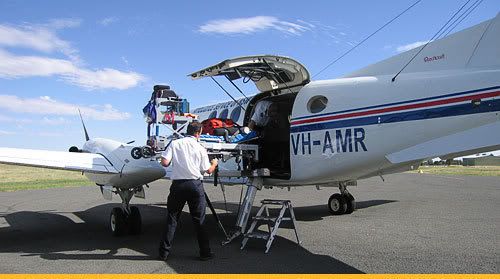
The fixed wing air ambulance works on the theory of powered by a jet engine or driven by a propeller. In terms of mechanic they are business jets or lear jets that have been converted into air ambulances. They are equipped with all latest medical equipment and can accommodate the patient and the medical crew.

Fixed Wing Ambulances
  1. They can be used to transfer patients for long distances and even overseas. A propeller driven turboprops may also be deployed for exceptionally long distances.
  2. They are often used in the rural districts of United States and Australia, where people have limited access to medical facilities.
  3. Their interiors are spacious and can carry medical escorts and flight nurses
  4. They do not need to stop often for refueling.
  5. They can also be flown in bad weather where a helicopter would be unable to take off.


Monday, 11 August 2014

Points to Consider When Transferring A Patient Long Distance

The decision to transfer a patient by long distance travel is a critical one. Long distance medical transport services providers need to keep some basic factors in mind.

Medical emergencies can occur anywhere and at any time. There are situations when the patent might be travelling abroad and needs to be shifted to a better care facility. The decision on whether a patient is in a condition to be moved or not is an important one. His family must consult a doctor or a well reputed travel medical assistance company in order to get the best suited advice. Have a look at five critical points that need to be considered –

1. The Condition of The Patient

The actual ground reality is the most important factor in determining the mode of transportation. Some medical conditions make travel by air impossible as the cabin pressure aggravates the condition of the patient. Others might need to be transferred in a jiffy, due to a deteriorating health condition.

2. Hiring an Air Ambulance

After careful evaluation it should be determined if time is the most critical factor that will determine the health of the patient. Then without any further delay an air ambulance should be hired. If time is not the primary factor, other options in medical transport by land or with a medical escort in a commercial plane should be considered.

3. Distance of Travel

For distances over 1500 miles, the mental and physical strength of the patient is the primary deciding factor for travel. As to travel such a distance implies at least a day of travel.

Long Distance Air Ambulance Services

4. Will The Family Be Accompanying?

Additional passengers, obviously implies additional prices. In ground transport most companies allow a family member or two. But in an air ambulance it varies from company to company.

5. The Team on Board

Most reputed companies will have ad designated team assigned to the patient. On an air ambulance a patient is accompanied by a nurse and two pilots. This ratio varies from company to company.

Friday, 8 August 2014

Steps on Searching For the Right Air Ambulance Provider

Long distance ambulance services do not come cheap, but are essential in a medical situation.
When stuck in a medical condition, it is natural to panic and feel distressed. Families need to get in control of the situation by calming themselves down and doing some research before hiring a company for non-emergency medical transportation services. One essential step that all families need to take is to go for a medical cover that takes care of the cost of non-emergency medical transportation services.

Air Ambulance Provider
Follow the steps written below and take a sound decision, when hiring a Air Ambulance Provider –
  1. Do Your Research – do your homework by searching on the internet for an air ambulance provider that has a good reputation and sound reviews. Check with your friends and relatives about the long distance ambulance, that they might have used in the past.
  2. Check the services offered – do a close scrutiny of the services being offered by the air ambulance company. Check the medical centers they offer transportation to. Make a note of whether they provide repatriation services or not.
  3. Ask As Many Questions – make a list of your entire queries and ensure you get answers for each one of them. Details about ages of the patients accommodated, credentials of the support staff, all should be looked into.
  4. Be Wary Of Hidden Costs – make sure you read the quote thoroughly and check twice for any hidden costs that might crop up later.
  5.  Don’t Be In A Hurry – when selecting an air ambulance do not jump at the lowest offer you get, as that might be the one with the most dicey services too. Always try to take a sound decision based on services, reputation, and cost offered.

Friday, 1 August 2014

A Detailed Review of a Long Distance Ambulance

When it comes to the health and safety of your loved one, take your decisions wisely.
When selecting a long distance medical transport services provider for your loved one, the choice can be baffling. The three common modes of transport available in a medical situation are -

  • A medical escort in a commercial airliner
  • An air ambulance with a medical team on board
  •  A long distance ambulance
The purpose of all the three is to ensure the safety and comfort of a patient, but they deliver their services differently. Let’s review them in detail –

1. Services of A Medical Escort

The services of a medical escort can be hired for an individual who will be able to sit through a long commercial flight. A trained and qualified escort is required to assist him on the flight and take care of all his needs. A medical escort is capable of taking snap decisions in the absence of a doctor, in case the need arises. A medical escort is the most cost efficient method to take care of a medically unfit traveler.

Long Distance Ambulance

2. An Air Ambulance

When the need for shifting a patient from one facility to another arises, an air ambulance is the quickest method. The patient can be transported over a stretcher. The team on board an air ambulance is fully trained to deal with any medical situation. When compared to other options, an air ambulance is the most expensive option for a patient.

3. When Air Travel Is Not an Option

A long distance ambulance is specially designed keeping in mind the needs of a patient who needs to travel thousands of kilometers. It is an ideal option for patients who are unable to take a long commercial flight with an escort or have the means to hire an air ambulance. Their cost is half of what a patient may pay for an air ambulance. There are medical teams on board the ambulance who monitor the patient around the clock. A three member team is known to be more effective as they can take care of the patient in shifts. The vehicles are roomy and specially designed to cater to an unfit person. 

Sunday, 27 July 2014

All You Ever Wanted To Know About An Air Ambulance

An air ambulance is the most convenient and comfortable means of transport for patients who are incapable of traveling by road.
An air ambulance is basically a small business class aero plane that has been designed to transport people who need urgent medical aid. It is especially helpful for covering distances beyond hundred miles and in cases when the patient is too weak or unwell to sit through a commercial flight. Have a look at air ambulances in detail.

1. Facilities on an Air Ambulance

The crew on the air ambulance is medically trained and has all the vital equipment like a respirator, ECG machines and CPR aids. The airplane is specially designed to ensure that the patient is safe and comfortable at all times.

Air Ambulance

2. Types of Air Ambulances

Ambulances can be categorized in two categories. The first type is the helicopters and the second are the small air planes. Helicopters are used for short distances and pressed into service in trauma situations. They are mostly managed by state run hospitals and are linked to the emergency department.  The aircrafts with fixed wings are generally used for medical transport of the non emergency kind.

3. Cost of an Air Ambulance?

As expected air ambulances are expensive. The cost is generally calculated on the condition of the patient, the aircraft that is being hired and the distance to be traveled. A reputed long distance medical transport services company will be committed to providing quality and affordable services to all their clients. It is advisable to carry a health cover when travelling abroad, in order to cover any such unexpected medical expenses.

4. Selecting the Right Service

You can choose an air ambulance service that suits your budget and the needs of the patient. Families can also opt for a medical escort service, especially in the cases where the patient is unable to sit up and handle the landing and takeoff procedures independently. The escort can monitor the condition of the patient continuously and provide any medical aid that he might need.

Saturday, 19 July 2014

Coping with DVT While Travelling by Air

The prospect of travelling long distance, sometimes leads to elevation of health issues. As air travel gets cheaper, the airports and the terminals are getting crowded by the day.
Flying by air is considered as one of the safest mode of travel. When making travel plans, which involve children and elderly, it is extremely important to keep the details of an air ambulance services provider handy. One of the common symptoms or medical condition seen while in flight is DVT or ‘Deep Vein Thrombosis.’ Let’s read a little more about it.
1. What Is DVT?
DVT is generally caused due to long hours of no or little activity. Small blood clots are sometimes formed in the feet and the legs. They are harmless in most people. But can pose a health risk for people suffering from heart diseases, cancer, pregnancy or a recent injury.

Coping with DVT while traveling
2. Why Does It Happen?
Some experts disagree about any certain relation between DVT and air travel. Airlines have limited space and the cabin crew generally discourages moving around. The long hours of immobility causes DVT. The air at high altitude is also very dry and adds to the trouble.
3. The Symptoms of DVT?
The symptoms may not be visible immediately and may get highlighted once you reach home or embark from the plane. It may start with pain in the calves and get worse every passing hour. The area of pain may also show swelling and redness. In some cases the clots may also get blue. If the traveler sees any such symptoms he should consult a doctor immediately.
4. How to Avoid DVT?
If you have no allergy to aspirin, take a small dose of it before you board the flight. Always wear comfortable and loose clothing while travelling. Avoid crossing your legs for long durations. If possible walk up and down the aisle after every hour or so. Keep yourself hydrated by having water.
5. Inform Your Doctor
Discuss your travel plans with your doctor and revise all medications with him for travel. Stay calm and enjoy the flight.

Tuesday, 1 July 2014

How to Make Arrangements for Medical Transport

Medical transportation can be required in various situations. An injury, a heart attack or any other medical emergency calls for the services of a professional travel medical assistance company.
The moment there is a medical emergency, the first thing that comes to mind is an ambulance. They are the most apt mode of transport in a medical emergency. Besides calling the emergency services, you can also hire the services of a medical transport provider. Follow the instructions –
1. Call your family doctor or your local hospital and make them aware of your medical condition.
2. The medics who will receive your call will be able to assess the situation and send staff and equipment accordingly. They are the best judge for the needs of the patient at that hour.
3. Ensure beforehand that you have insurance cover to take care of your any unprecedented medical transport needs.
4. Be smart and keep your insurance details handy as the medical transport will ask for them.
5. If the need arises an air ambulance should be hired, especially if the patient is very critical and the present hospital is not equipped to deal with the situation. The services of a flight medical escort can also be requested, to ensure that the patient is monitored around the clock.

Air Ambulance Transport
6. The most ideal method to arrange for an air ambulance is by getting it recommended by the local physician. They will be able to advise you on the best transportation services and about tie ups with good hospitals.

7. If the medic team feels that there is no time to hire an air ambulance, a helicopter should be hired. The local hospital will know exactly whose services to call and where. Schedule a time and location at the earliest and keep the logistics handover ready.